
Curriculum
What we teach, and how children progress.
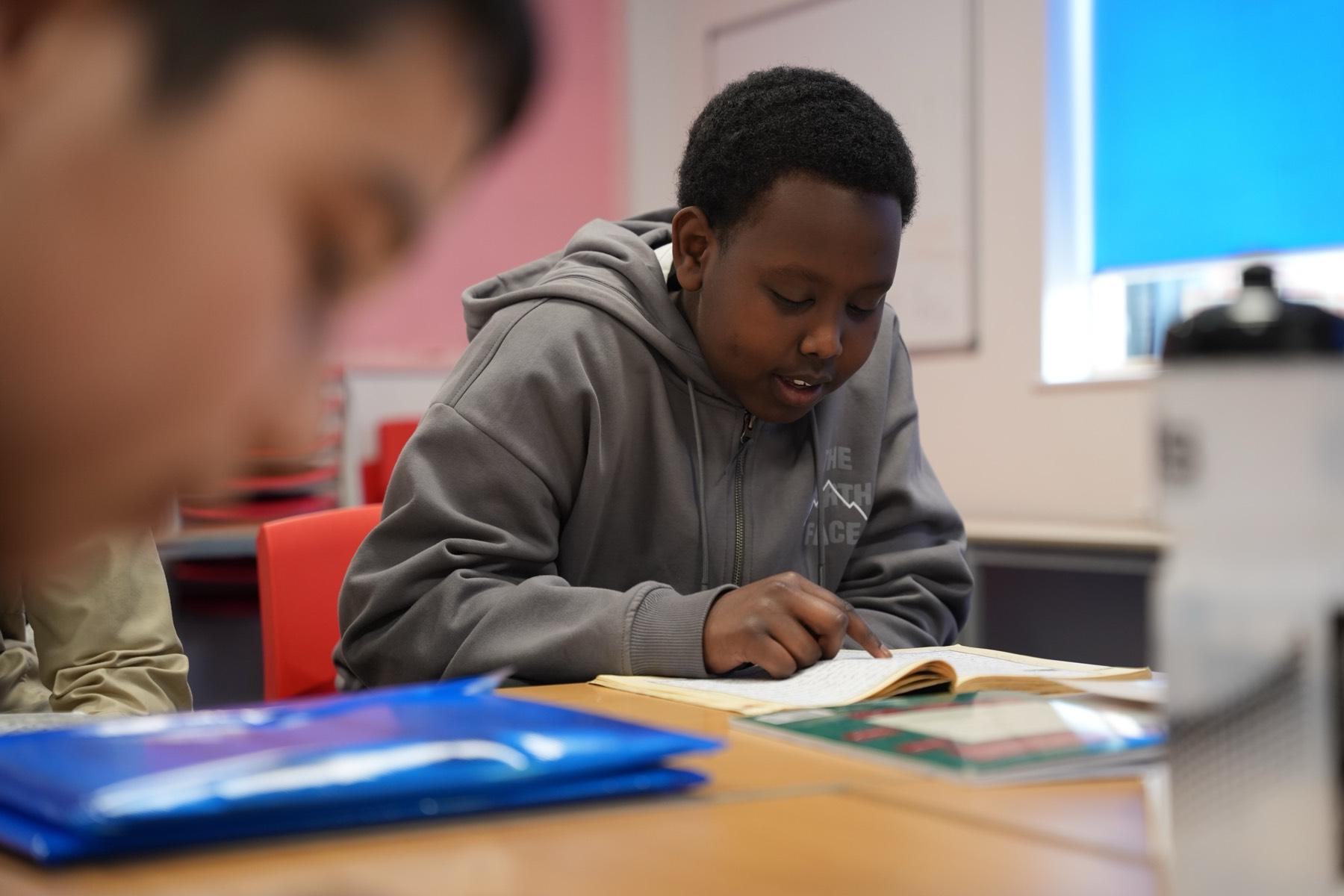
Three core subjects — Qur’an, Arabic, and Islamic Studies — each delivered across three levels. Students join the class that matches their age and level.
How Levels Work
Taught at the right level, not just the right year group
Children work at a level that matches what they can already do, and move up when they’re ready for it.
Assessed on entry
Every child is assessed and placed according to their current level in each subject.
Taught at their level
Classes are grouped by ability, so the pace and challenge are always appropriate.
Progress when ready
Children move up when they demonstrate solid understanding and competency — never rushed.
Strand 1 of 3
Qur’an
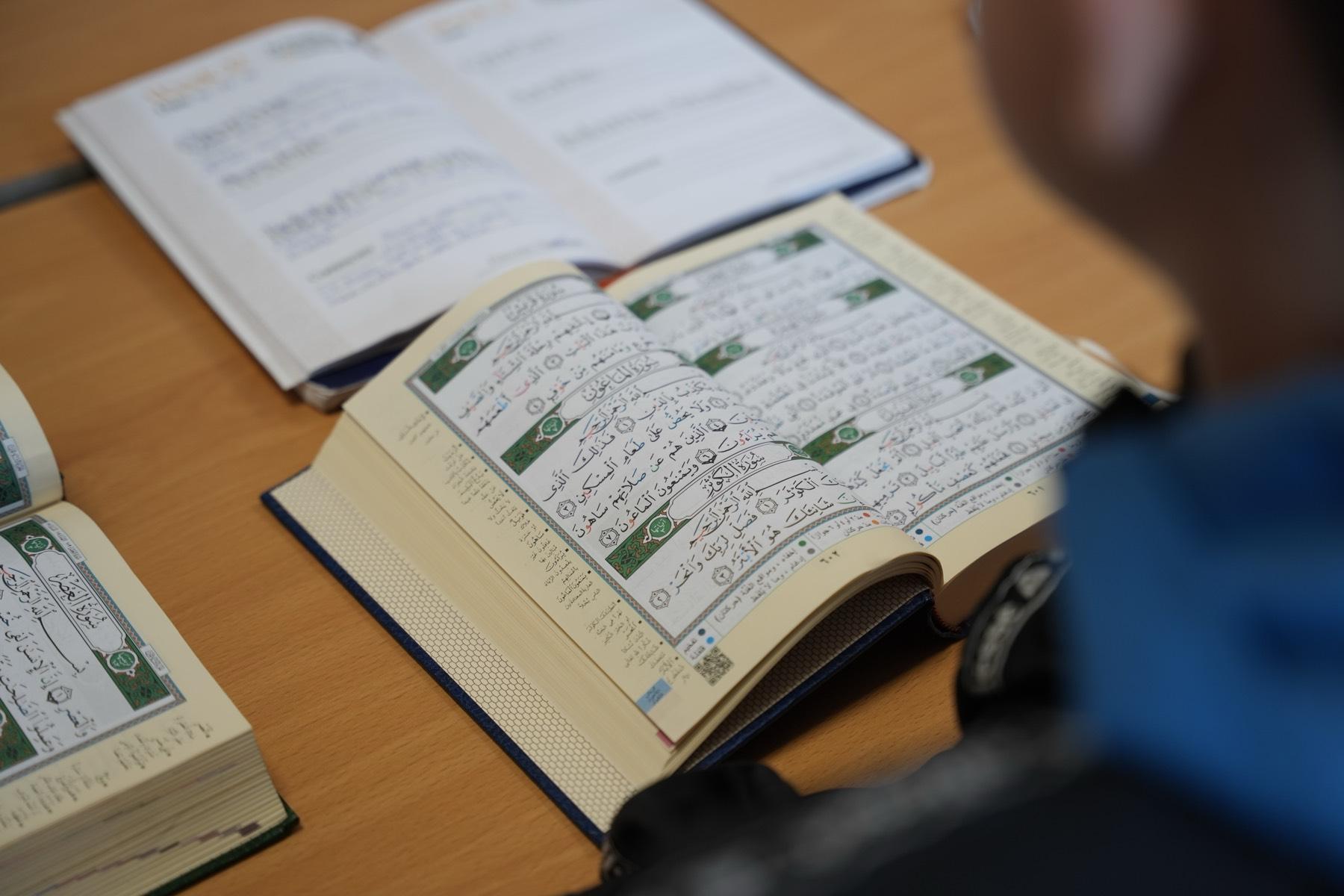
Building strong foundations in Qur’anic recitation from letter recognition to fluent reading with applied tajwīd.
Level 1
Letter Recognition & Pronunciation
Students learn to recognise Arabic letters and pronounce them correctly from the start.
- Recognise all Arabic letters
- Pronounce each letter clearly and correctly
- Read simple vowelled words
- Understand basic letter shapes and forms
Level 2
Reading with Vowels & Applied Tajwīd
Students progress to reading connected text with vowels and begin applying basic tajwīd rules in their recitation.
- Read vowelled Qur’anic text independently
- Apply basic tajwīd rules while reading
- Recite with improved fluency
- Understand essential tajwīd concepts
Level 3
Fluent Recitation & Tajwīd Theory
Students achieve fluent recitation and study foundational tajwīd theory to deepen understanding of the rules they apply.
- Recite fluently with confidence
- Apply advanced tajwīd rules accurately
- Understand theoretical foundations of tajwīd
- Recognise and correct common mistakes
Strand 2 of 3
Arabic
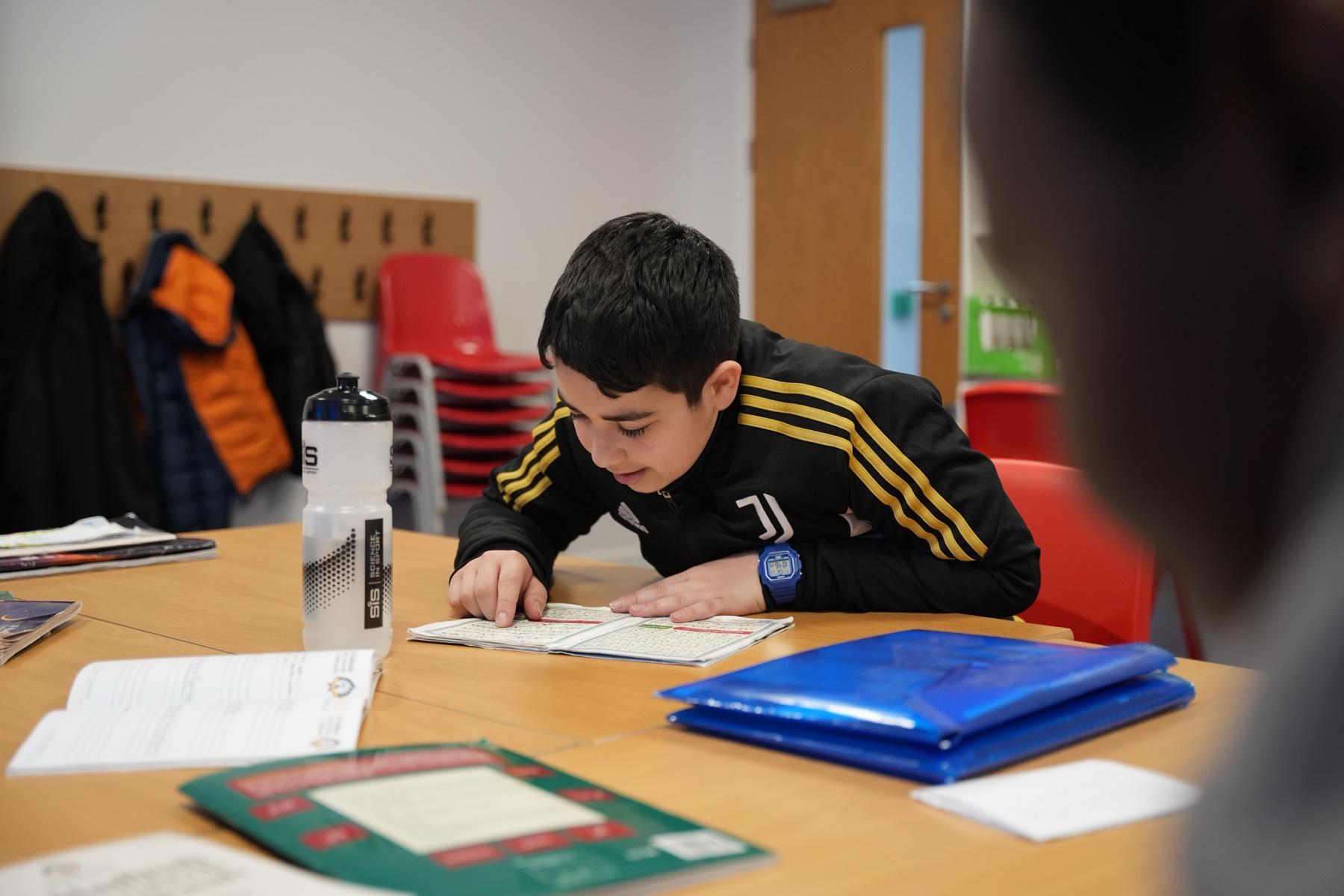
Structured learning focused on reading, vocabulary building, and comprehension.
Level 1
Alphabet & Vowelled Reading
Students gain confidence with the Arabic alphabet and develop the ability to read vowelled Arabic text.
- Master the Arabic alphabet
- Read vowelled words and sentences
- Recognise basic vocabulary
- Build foundational reading skills
Level 2
Vocabulary Banks & Phrases
Students build vocabulary banks and learn to work with phrases, developing comprehension skills.
- Acquire core vocabulary sets
- Understand common phrases and expressions
- Translate simple words between Arabic and English
- Demonstrate basic reading comprehension skills
Level 3
Comprehension & Translation
Students work with more complex vocabulary and develop translation skills between Arabic and English.
- Read and comprehend Arabic passages
- Translate between Arabic and English with accuracy
- Work confidently with expanded vocabulary
- Apply foundational grammar understanding in reading
Strand 3 of 3
Islamic Studies
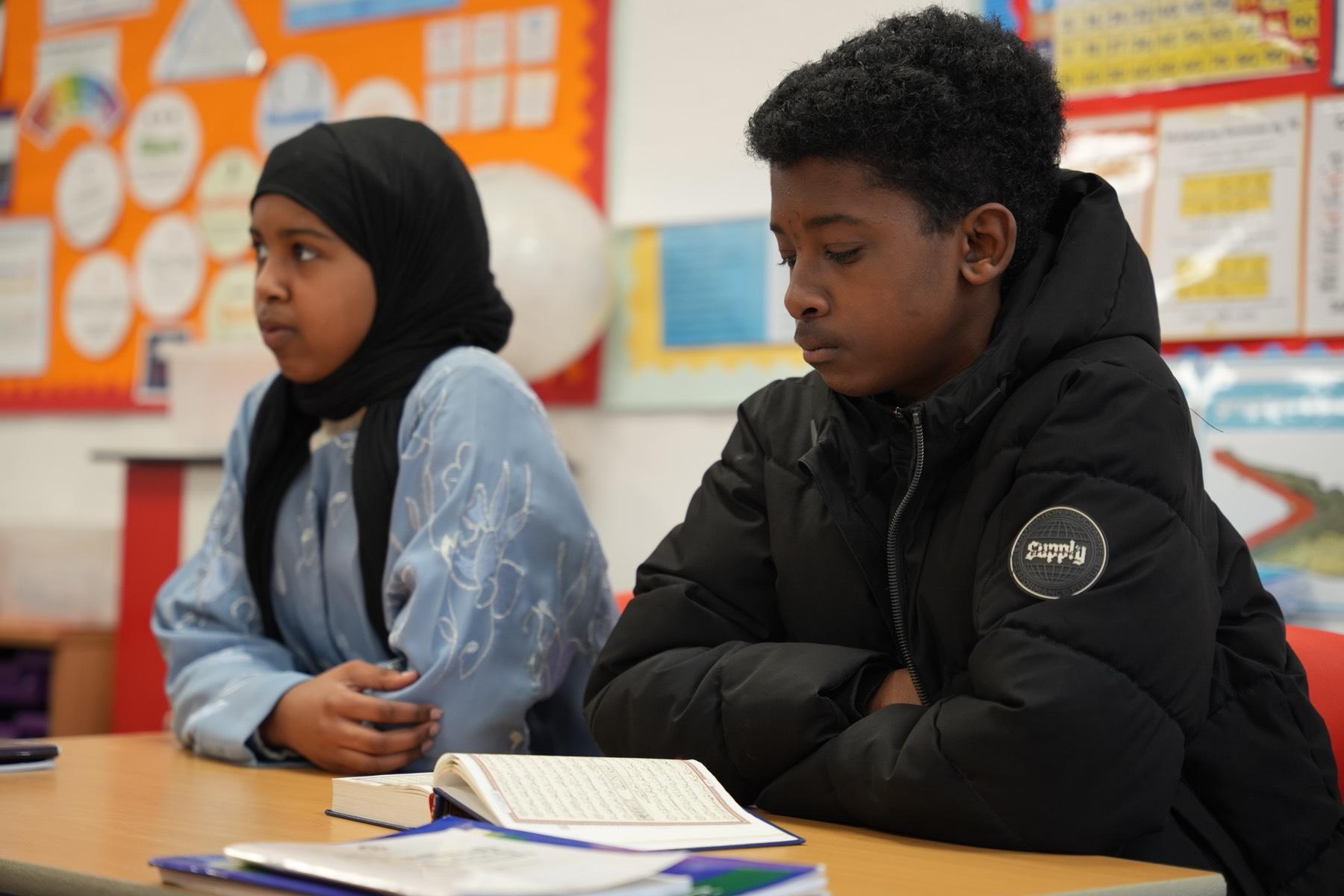
Learning essential Islamic knowledge covering ʿaqīdah, fiqh, sīrah, and akhlāq appropriate to each level.
Level 1
Foundations of Faith & Practice
Students learn core beliefs, basic worship practices, and prophetic stories suitable for their age.
- Understand pillars of īmān and islām
- Learn basic acts of worship
- Know key stories from the Prophets
- Develop good Islamic character (akhlāq)
Level 2
Deepening Knowledge & Understanding
Students revisit core topics with greater detail, strengthening understanding and consistency in practice.
- Strengthen understanding of core beliefs and worship
- Learn with greater detail and clarity
- Develop consistency in daily practice
- Continue building strong Islamic character
Level 3
Advanced Knowledge & Application
Students further develop their understanding of core topics, with greater confidence, independence, and real-life application.
- Show clear understanding of key Islamic concepts
- Practise worship with confidence and consistency
- Reflect on lessons from prophetic teachings
- Apply Islamic values in everyday situations
Teaching Approach
Foundations first.
Getting it right matters more than getting through it. A child who reads ten verses properly has done better than one who has rushed fifty.
Qur’an is taught by listening and repeating after the teacher, the way it has always been taught. Arabic and Islamic Studies use structured materials, with time each week to go back over what’s been covered.
Termly reports on your child’s progress.
Enrolment
Begin with a conversation.
We offer rolling registration throughout the year. Contact us to discuss your child’s placement and current availability.